Considering huge opportunity in Travel industry, many start-up entrepreneurs are bullish to start their own vacation rental business with vacation rental script. AirBNB Clone is considered to be one of the successful business model, which is popular since last decade, among travel industry. Many entrepreneurs from across the world have started profitable business using vacation rental script like AirBNB Clone.
NCrypted is one of the leading website clone development company offers customized Vacation Rental Script with many notable features. In fierce competition you need to ensure that your property listing is noticed on AirBNB Clone and at time it would be booked subsequently. Let’s have a look at top tips that makes your vacation rental business a huge success.
Effective Property Listing
You should list your property with high accuracy and details on Online Accommodation Booking Website which increases search performance of property listed on vacation rental script. Details includes accurate title, detailed description about property listed along with amenities provided so that guest can have idea about what is provided during their stay.
On most important thing you can mention in property listing is Neighborhood or you can say surrounding area near by your property, room type etc., which makes effective property listing.
Reviews and Feedback
One of the major focus that every online business have, is positive Reviews and Feedback. It has huge impact on business and in fact it has been observed in survey that 9 out of 10 people check reviews and feedback before booking online accommodation done on vacation rental website.
You can earn positive reviews for your business on review websites like Yelp, Glassdoor that makes AirBNB Clone ranks higher. Positive reviews can be earned by professional communication, quick and easy booking, competitive price with maximum amenities inclusion. You can ask guest to review and feedback at time when they are leaving that makes good impact on guest.
Listing Promotions
Effectively listing your property on AirBNB Clone won’t get subsequent booking nor do they rank higher on it. You must promote your property listing on reputed social media websites like Twitter, Facebook, Google+, Pinterest and many more, which also helps your listing discovered on search engines like Google.
The best way to promote your listing is ask your friends, family to review positively along with Facebook sharing, +1, retweet etc.
Availability Updates
Availability updates can be done using iCal on BistroStays. You can update property availability by Export/Import Calendar. If availability updates is not available then might be chances you lose booking leading them to book accommodation on another vacation rental website.
Quick Response
Quick response is one of the key to create good impression on guest. You must respond inquiries and inbox messages as quick as possible or at the max within 24 hours of message dropped on your property listing. AirBNB Clone App is also available that helps you respond immediately.
Major drawback of not responding quickly is, guest can search online accommodation booking elsewhere and might be possible they can book accommodation elsewhere due to immediate response. So it’s better to respond immediately.
Decrease Cancellations
Until and unless if there is unanticipated circumstances you must not cancel booking made on your property listing. It will create trouble to guest who have booked accommodation and will be unhappy with unexpected cancellations which ultimately be panelized in AirBNB Clone’s search also. So try to decrease cancellations.
So, if you own Vacation rental website you can definitely implement above tips for successful vacation rental business. For more details you can visit BistroStays – the most powerful vacation rental software available in market..
You can build a mobile app in a weekend now. No joke. There are templates, SDKs, AI code assistants, drag-and-drop editors – the whole toolkit. But here’s the thing most people don’t realize until later: launching the app is the easy part. Making money from it? This is where things start to get murky. And the numbers prove it.
According to Business of Apps, over 95% of mobile apps are free, but only about 4% of users ever purchase those apps. On top of that, 80% of apps fail to become financially viable within their first year of launch.
And it’s not because you didn’t build something useful. Plenty of great mobile apps just never figure out how to bring in consistent revenue. They launch. They get some downloads. Maybe even a bit of buzz. But the money? It doesn’t come. Or if it does, it trickles in, not enough to cover costs, let alone scale.
Part of the problem is timing. Most developers or business owners wait too long to think about monetization. Others jump the gun and force it in too early. Or worse, they pick a revenue model because it worked for someone else, forgetting that their app, their users, and their value proposition are probably different.
This guide is not going to sell you a magic formula. Because there isn’t one, what it will do is walk through the decisions that matter when you’re trying to make money from your app, decisions rooted in real user behavior, product fit, and long-term value.
If you’re looking to avoid the traps most app owners fall into or you’re just figuring out where to begin, this is a good place to start.
Why Most Mobile Apps Fail to Generate Revenue
There’s no shortage of mobile apps out there. Browse any app store and you’ll see hundreds of alternatives for just about anything from meditation to grocery lists to AI selfie editors. But dig a little deeper and you’ll notice something else: most of them aren’t making money. Not real money, at least.
So, what’s going wrong?
Monetization is treated as an afterthought
A lot of teams focus entirely on building and launching. And that’s fair, as getting something functional and polished out into the world takes real effort. But then what? If you haven’t thought about how you’ll earn revenue until after launch, you are already playing catch-up. Tacking on monetization later often feels forced, and users can tell.
The wrong model is forced onto the wrong product
Not every app should be a subscription. Not every audience will tolerate ads. But because certain models worked for big names such as Duolingo, Tinder, and Calm, smaller developers assume they’ll work for them too. They rarely stop to ask: Does this model fit what our users want and how they use our app?
User behavior is misunderstood
Downloads ≠ revenue. Some mobile apps get tens of thousands of installs, but if users open the app once and never come back, monetization is a non-starter. Success isn’t just about traffic, but it’s about retention, engagement, and timing. You need to understand where users find value and what they would pay for.
Too many friction points
Sometimes, the monetization is there, but it’s clunky. The pricing feels arbitrary. There are too many pop-ups. Or the paywall hits way too early. Any of those can make users drop off, especially if there are free alternatives one tap away.
Focus is skewed toward growth, not sustainability
There’s a lot of hype around user acquisition, like paid campaigns, influencer pushes, and viral loops. And while growth is important, it’s not the endgame. Without a revenue strategy that scales with that growth, you’re just collecting installs, not building a business.
We have some reasons for the failure of mobile apps covered in our article: Why mobile apps fail
Key Factors That Influence Your Revenue Strategy
#revenuestrategyformobileapps
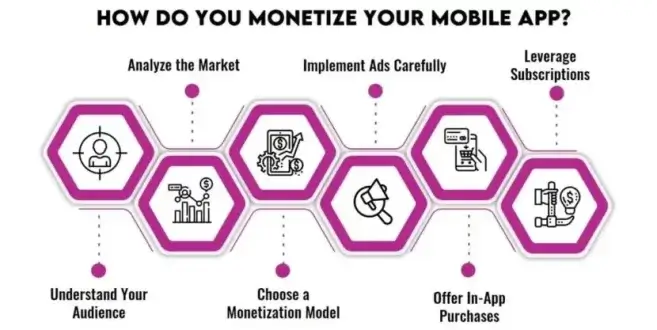
Before picking a monetization model, it’s important to understand what drives value in your app and how users interact with it. The following five factors will guide how you structure your revenue strategy, from pricing to what features you decide to gate behind a paywall.
Type of App
Your app’s core function shapes what kind of monetization will feel natural to users.
Every app solves a different kind of problem or provides a different kind of experience. That alone influences what people expect to pay for and how they expect to pay. A game might thrive on small in-app purchases and rewarded video ads, while a meditation app will lean more into subscription models that promise ongoing value.
For example:
Gaming apps tend to succeed with in-app currency, character unlocks, or level upgrades.
Fitness or health apps often offer freemium tiers, with progress tracking and coaching locked behind a monthly plan.
Utility apps (like file converters or scanner tools) may perform better with one-time purchases because they’re often used for a specific task.
Your monetization should match the app’s category and how people are used to engaging with apps in that space.
Target Audience
Understanding your user base is crucial, not just who they are, but how they behave.
A monetization strategy that works brilliantly for one audience could flop for another. If your users are professionals, they may expect and accept monthly pricing, especially if the tool helps them do their job better. But if your audience is younger or in a price-sensitive region, they may resist even the smallest payment unless they see immediate, tangible value.
Think about:
Geography: Are your users in high-income countries or emerging markets?
Device preference: Are they Android-first users or iOS-heavy?
Payment habits: Do they already pay for digital services, or is this a new behavior?
It’s not just about affordability. It’s also about perceived value, trust in online payments, and cultural expectations around pricing.
Usage Frequency and Habits
How often users open your app can determine the kind of revenue model that will work best.
Apps that become part of someone’s daily or weekly routine, like habit trackers, news readers, or language-learning apps, are strong candidates for recurring subscriptions. Why? Because users are consistently coming back and getting ongoing value.
On the other hand, apps that are used occasionally, say, once a month or just a few times a year, need a more lightweight approach. Charging a one-time fee or offering feature-based upgrades might work better there.
Look into your analytics:
Are users opening the app daily?
Do sessions last longer over time?
Is there a drop-off after the first use?
These patterns should shape whether you go with subscriptions, freemium, or something else.
Depth of Engagement
Frequency tells you when users are engaging. Depth tells you how much they care.
If people are using only one or two basic features and then leaving, they’re probably not ready to pay, or the value isn’t clear enough. But if they’re diving into settings, customizing the experience, completing onboarding steps, and exploring advanced tools, that’s a strong signal. It means they’re invested.
Apps with deep engagement can justify more premium experiences. Think about:
Unlocking extra tools or analytics
Removing friction (like ads or limits)
Introducing collaborative or team-based features
When users are actively engaged, they’re more likely to convert and stay converted.
Core Value Proposition
If you’re not clear on the real value your app offers, no monetization model will work.
You might think your app is about saving time, but your users may be showing up for convenience or peace of mind. You might think it’s all about features, but maybe your audience is paying for access, status, or even aesthetics.
Clarifying the true value your app delivers helps you figure out what people are willing to pay for and how to price around it.
Here’s how it plays out:
If your app helps users accomplish a goal (learning, productivity, fitness), tiered subscriptions can work.
Whether it offers exclusive access (content, community, tools), gated paywalls or memberships makes sense.
Does it provide on-demand convenience (utility or task-based apps), one-time purchases, or credits may be the better route.
Without a strong, clearly communicated value proposition, even the most sophisticated pricing strategy will fall flat.
Popular Revenue Models for Mobile Apps
Ask anyone building an app what their monetization plan is, and you’ll get a mix of answers. Some will say ads. Others will mention subscriptions or in-app purchases. A few might just shrug and say, “We’ll figure it out later.” And honestly? That last one is usually the red flag.
Here’s the thing: there’s no perfect model. What worked for one app might crash and burn for another. It depends on what you’ve built, who it’s for, how they use it, and how often. Still, there are a handful of revenue strategies that show up again and again in successful apps, and understanding how they work in practice is the real starting point.
Let’s talk through them.
Advertisements
If your app is free and gets a lot of traffic, ads probably seem like the obvious route. And sure, it can work, especially if you are in entertainment, casual gaming, or content-heavy apps. But here’s what people don’t talk about enough: ads come with a cost. No financial experience. Banner ads are mostly ignored. Full-screen interstitials? Annoying if they pop up too often. Rewarded videos? Surprisingly tolerable… if done right.
You’ll make money off impressions, clicks, or views. But unless you have serious user numbers, it won’t be much. And if the ads mess with the flow of your app, your reviews will tank. So use ads, sure. Just don’t lean on them too hard unless you’re ready to scale big.
Freemium
Freemium is not just a pricing model; it’s a psychological play. You give people something for free, they try it, and if it clicks, they are more likely to pay for more. It’s used in everything from productivity apps to music players to design tools.
The key is finding the right balance. Too generous, and users never upgrade. Too restrictive, and they bounce before they see the value. The smartest freemium apps draw a clear line between “useful” and “indispensable”. You let them taste it, then sell them the full meal.
One warning: converting free users into paying customers is harder than it looks. You will need to track behavior, test pricing, and constantly tweak what features sit behind the paywall.
Subscriptions
If your app provides continuous value, think fitness, finance, journaling, and education subscriptions are worth considering. The appeal? Predictable income. Monthly or yearly payments that let you plan.
But it cuts both ways. Users expect consistent updates, fresh content, maybe even some personalization. If your app goes stale, they cancel. Fast.
Also, pricing matters here. Go too high and scare people off. Go too low and you undercut yourself. Many apps offer a trial period, then push for an annual plan with a slight discount. That sweet spot enough to feel worth it, but not enough to hurt is where retention lives.
In-App Purchases
Not every user wants a subscription. Sometimes they just want to unlock one thing. A new feature. A toolkit. A design pack. Power-ups. Extra lives. Whatever fits.
This is where in-app purchases shine, especially for gaming, creative tools, and even some utilities. They give users a choice. You’re not locking them into a plan. You’re offering little upgrades that make the experience better.
But, and this is a big one, you need to be careful not to frustrate your users. Don’t create problems in the free version just so you can sell the solution. That’s a guaranteed way to lose trust.
Paid Apps
Remember when you just… paid for an app? No subscriptions. No in-app buys. Just a one-time fee and you’re in.
That model still works, but only in specific cases. Usually, it’s utility-based apps document scanners, sleep sounds, offline maps, stuff people use repeatedly but don’t need constant updates from.
The upside? Simple. No surprise charges. No pressure to deliver weekly content drops. The downside? Harder to convince users to pay upfront unless they already know the value. So unless you have a strong brand, killer reviews, or a reputation that speaks for itself, this one’s tough to scale.
Sponsorships
If your app serves a niche, loyal audience, this is worth exploring. Let’s say you run a cycling tracker app with tens of thousands of daily active users. A sports brand might pay to sponsor your weekly challenges or run a branded leaderboard. It’s native, it’s relevant, and it doesn’t interrupt the experience.
But this model only works when you have two things: a clear audience segment and solid engagement data. Brands don’t just want reach, they want to know your users actually show up and stick around.
Hybrids
The best apps often don’t stick to just one model. They combine them a free app with ads, but a subscription that removes them. Or freemium with optional in-app purchases. Or even content sponsorships layered into a tool-based subscription app.
It can work beautifully… or it can feel like a mess. If you go this route, keep it clean. Don’t introduce too many pay points or complicate things with five tiers. Users should always know what they’re getting and what it costs.
#howdoyoumonetizeyourmobileapp
User-Centric Monetization Strategy
Here’s the truth: people don’t mind paying. They just don’t want to feel tricked into it. Most of the time, app developers get that part wrong. They build the product, maybe even do a pretty good job. Then somewhere near the end, they start thinking, “Okay, where can we drop in the pricing?” So they hide a paywall behind the third click or slap a “Pro” badge on a button that used to be free.
And what happens? Users leave. Or worse, they stay, but never pay, because now they don’t trust you.
Let the user lead and listen to what they’re not saying
Users won’t tell you, “Hey, I would have paid for that feature if you introduced it 10 minutes later.” But they will show it. They’ll stop using the app. Or they’ll keep using it, but only the free parts. Or maybe they just uninstall it without giving feedback. Either way, the signal is clear: the monetization felt off. Either too soon. Or too aggressive. Orfaol too confusing. The best time to ask users to pay? Right after they’ve felt the app’s impact. Not when they open it. Not mid-onboarding. Wait until they’ve had a small win. Something they’ll want more of.
It’s not about pricing. It’s about timing, tone, and trust.
You could charge $2. You could charge $20. If the ask feels fair, and the value feels real, people will pay. But the second, it feels manipulative? You’ve lost them. Maybe not today. But soon. And probably for good. Have you ever used an app that suddenly says, “Upgrade now to access your data”? That’s not clever. That’s just bad design pretending to be a business model.
Show, don’t sell
A feature list isn’t enough. People don’t look at a list and get excited. They look at what the app did for them, what it helped them accomplish, fix, avoid, and improve, and they think, “Okay, this is worth it.” So instead of pushing users toward pricing plans, pull them toward outcomes. Make the trial useful. Nudge them toward little wins. Help them feel progress. If you do that, you won’t have to “convince” them to upgrade. They’ll want to.
Don’t turn pricing into a puzzle
The more users have to think about what’s included and what’s not, the less likely they are to pay. Just be clear. Keep your plans simple. If you have a free tier, show what’s limited. If something’s included only in the Pro plan, say that upfront. Don’t hide the price until checkout. Don’t bury a cancellation policy behind three links. That stuff erodes trust, and it shows up in your churn rate, not just your reviews.
Make canceling painless
You know what makes people come back? Feeling like they’re in control. Let users pause, downgrade, cancel, whatever. No drama. No friction. The moment you try to trap them, they’re gone for good. Funny enough, when users feel like they can cancel anytime, they often don’t. That’s what trust does.
You’re not selling software. You’re selling a belief.
At the end of the day, people don’t pay for apps. They pay for what they think the app will do for them. Less stress. More time. Better health. Progress. Control. Whatever it is, that’s what you’re monetizing. If your app helps them feel that, and if your pricing doesn’t make them feel cheated, they’ll pay. Maybe not right away. But when the time is right, they will.
How to Test and Validate Your Revenue Model
So you’ve picked a monetization strategy. Maybe it’s freemium, maybe you’re charging up front, maybe you’re mixing in some ads or subscriptions. Now comes the part most people skip: testing whether it works.
Because here’s the thing: what sounds good on paper rarely survives contact with real users. You have to validate it. You have to tweak it. And yes, you have to be willing to admit when your original plan just isn’t landing.
Let’s walk through how to do that without guessing, and without burning through your entire user base in the process.
A/B Testing Price Points
You can’t just pick a price and hope for the best. And no, looking at what your competitors charge isn’t enough. You need real user behavior to tell you what works.
That’s where A/B testing comes in.
Show one group of users a $4.99 upgrade.
Show another group $6.99.
Maybe even try $3.49 with fewer features. Then compare what happens. Not just who buys but who stays, who upgrades later, who churns.
And here’s something people miss: the “winner” isn’t always the one that gets the most purchases. Sometimes, a higher price with fewer conversions brings in more total revenue and attracts higher-intent users who are less likely to cancel. It’s not just about conversion rate, it’s about the quality of customers too.
Just make sure you’re testing long enough to get meaningful data. Don’t panic after two days and declare a winner. Let the numbers breathe.
Analyzing Churn and Retention
One-time payments are great, but if you’re running a subscription model, this is the game. Are people staying? Are they canceling after the trial? Are they disappearing after two weeks?
Your revenue model might look good in the first 7 days, but if half your users bail before Day 30, something’s broken. Either you’re charging too soon, delivering too little, or setting the wrong expectations.
Track:
When users cancel
How long do they stay before that
What they used inside the app
Sometimes, you’ll see patterns. Users who skip onboarding are way more likely to churn. Or people who hit one key feature on Day 2 stick around for months. That’s gold. You use that to guide everything, messaging, pricing, and UX.
LTV (Lifetime Value) and CAC (Customer Acquisition Cost)
If you only look at revenue per user, you’re not seeing the full picture. What matters is how much each user brings in over time and how much it costs you to get them.
LTV = what you earn from a user across their full lifecycle.
CAC = what you spend (ads, influencers, content, etc.) to acquire that user.
If your CAC is higher than your LTV? You’re in trouble. It means you’re spending more to get customers than they’re worth. That might be okay in the short term (during a growth push), but it’s not sustainable.
So test your revenue model against your acquisition strategy. Sometimes you don’t need a new monetization method you just need cheaper traffic, better onboarding, or a more focused user base.
Tools to Use: Firebase, RevenueCat, Mixpanel, etc.
Good news: you don’t need to build all your analytics from scratch. There are lots of them, and they make this process way less painful.
Here’s what’s worth looking at:
Firebase (by Google): Great for tracking user behavior, retention, funnels, and events. If you’re just starting out, this gives you a ton of insight with minimal setup.
RevenueCat: If you’re running subscriptions or IAPs, this is a lifesaver. It handles billing logic, receipts, churn metrics, everything Apple and Google make unnecessarily complicated.
Mixpanel: More advanced product analytics. You can set up custom funnels, cohort analysis, and behavioral tracking across your app’s lifecycle.
Amplitude: Similar to Mixpanel, but some teams prefer its UI and flexibility. Great for digging into what drives conversion and retention.
Don’t just install these tools and forget about them. Check the dashboards. Set up alerts. Talk to your team about what the numbers mean. You’re not just tracking data, you’re listening to what your users are telling you without saying a word.
Common Monetization Mistakes to Avoid
So here’s where things usually start to go sideways. You’ve got the app, you’ve picked a revenue model, and maybe you’ve even started testing it. But then you make one small mistake, and suddenly, your users are gone. Poof.
Let’s talk about the stuff that kills app monetization before it ever has a chance to work. The stuff that’s easy to overlook. Or worse, the stuff that feels clever in the moment but backfires almost every time.
Charging Too Early
Big one. Way too many apps throw a paywall in someone’s face before they’ve even figured out what the app does. You open it, tap around for five seconds, and boom, “Start your free trial now!” Slow down. You haven’t earned the user’s trust yet. They don’t even know if your app’s any good. Ask for money after you’ve helped them do something useful. That first win? That’s when they’re ready to listen.
Giving Away Too Much
The flip side. You’re trying to be generous, so you make 90% of your features free. But now no one upgrades. Because… why would they?
This happens a lot in freemium apps. The developer wants to build goodwill, but ends up removing the incentive to pay. If your free tier does the job, users won’t even look at the paid plan.
You need helpful friction, enough value to hook them, but not so much that they never need more.
Burying the Value in a Maze
Some apps have good premium features. Really useful stuff. But users never find it. Or they find it too late. Or it’s hidden behind five clicks and confusing language like “Advanced Toolkit Upgrade Option Plus.”
No one has time for that.
If you’re offering something worth paying for, surface it. Make it obvious. Make it feel natural. “Hey, want to unlock this? Here’s what it does. Here’s what it costs.” That’s it.
Forgetting to Nurture Free Users
Not everyone will pay right away. That doesn’t mean they’re useless. Some of your best customers start as free users who stick around, get value, and upgrade later. But if your app ignores free users with no guidance, no updates, no engagement, then they’re gone. And they’re not coming back.
Send helpful nudges. Show off what’s possible. Make them feel included. Then, when they’re ready, make upgrading feel like a choice, not an obligation.
Hiding Prices Like It’s a Game
There’s this weird idea that hiding your pricing until the very last second will increase conversions. Maybe that worked ten years ago. Now it just feels shady.
People want to know what they’re getting into. Upfront. Don’t make them tap five times and enter their email just to see what your app costs. Be direct. Be clear. It builds trust.
Using Ads Like a Sledgehammer
Ads are fine. Overused ads are not. Especially if they interrupt key moments in the app. No one wants to watch a 30-second video right after they hit a goal or unlock something cool.
You can run ads without ruining the experience. Rewarded videos, for example, are a solid compromise. “Watch this, get a bonus.” Feels optional. Feels fair. That’s what you want.
Treating Monetization Like a Feature You Tacked On
If your pricing, paywalls, and upgrade paths feel like they were added at the last second… users can tell. It feels clunky. Forced. Like an afterthought.
Monetization isn’t just about making money; it’s about shaping how people move through your app. It should feel like part of the product. Aligned with the value. Integrated into the journey.
Build it in, not around.
The takeaway? Most monetization mistakes don’t come from greed. They come from guessing. Or rushing. Or copying someone else’s strategy without asking why it works for them.
So don’t be clever. Be clear. Be honest. And make sure your revenue model respects the one thing users care about most, their time.
Thinking of building an app that brings in money?
Don’t wait to figure out revenue after launch. If your app’s going to make money, that needs to be part of the plan from the start, with how it’s built, how it’s designed, the whole thing. For this, talk to our team. Whether you’re starting fresh or reworking something that’s already live, we’ll help you go beyond just “getting it to work.” We’re talking about apps that people use, enjoy, and pay for. From day one.
So yes, bring us your idea and we will help shape it into something that works, not just in theory, but out there in the real world, with real users and real revenue behind it.
The business model of the over hyped budget hotel network OYO Rooms doesn’t make sense to me for many reasons. The next unicorn (a private company valued at over US$1 billion) in waiting appears to be the next bye-bye story to me. In case you didn’t know, we were the technology partners of OYO Rooms (with the parent Oravel Stays) when it was into an Airbnb type of business before it pivoted to the current business model. We at NCrypted have been partnering with startups and businesses into the vacation rental and online accommodation business through our services and products like BistroStays. So, I know enough about this industry in order to be able to comment on how these businesses are run.
Note: This article was published on March 2016 and OYO has got a couple of funding rounds in excess of US$250 million dollars afterwards from a consortium of investors lead by, none other than, Softbank. So, while the startup still seems to be operating, the conclusion of this article would still be shocking and eye opening to those who are planning to start their own business like OYO Rooms.
Is OYO Rooms publishing fake numbers to project growth?
Softbank, the lead investor in the over hyped budget hotel aggregator OYO Rooms, recently made two announcements that included OYO Rooms growth story. If you compare that with the other numbers that the startup publicly disclosed along with their financials available with the RoC, the story starts looking fishy. The startup recently claimed 15x YoY growth and claimed to be profitable! Their claim to become profitable is highly misleading. I did a very short analysis and found out that the next unicorn (a private company valued at over US$1 billion) in waiting is poised to be the next bye-bye story unless some miracle happens, forget about profitability. It appears that the startup desperately need to raise another funding round or shut shop in a couple of months.
OYO Rooms Business Model
OYO Rooms claims to be a branded network of budget hotels and thus different from other hotel aggregators and OTAs (Online Travel Agents) such as Goibibo, Makemytrip, Cleartrip, Yatra etc. The business model of hotel aggregators is simple as they simply connect the guest (customer) with the hotel by listing hotels on their website and take a commission as their revenue. Many a times they work out on a deal with the hotels with a minimum order guarantee per month and hence are able to provide discounted rates and deals on the room rates compared to the rates provided by the hotels directly to a normal guest. This makes them lucrative for guests. OYO business model is different. It neither owns any hotels nor is a hotel aggregator.
What is OYO business model then? You may ask. This part is interesting.
Consider OYO as Uber for hotel aggregation. OYO partners with non-standardized hotels and blocks rooms by buying them out for a certain time duration. It then resells the room inventories with OYO branding to guests. This business model of OYO Rooms naturally adds up a lot of operational cost and requires huge working capital to first block those rooms. Now, you know where the Softbank money is going!
The way OYO Rooms operates is different from OTAs since they focus on co-branding. They are saying that they partner with zero to 2 star hotels and even guest houses, ‘standardize’ them and bring them customers through their site and apps. Their initial marketing strategy was to list OYO properties on other hotel aggregators but that trick got hit when sites like Makemytrip, Cleartrip and Goibibo blacklisted it. This was funny because in many cases the hotel was having two listings on the same OTA, one directly by itself and one through OYO although OYO would use its own branding there and thus not disclosing the hotel name and address to anyone publicly until you book it. There are thousands of cases reported by guests on Facebook and elsewhere wherein they were not able to locate the OYO property as they did not disclose the hotel name and had half written address even after the booking was confirmed.
But, (bad) customer service is not where we want to focus on in this article. You might be asking, then why are these hotels allowing OYO to use its branding with a signage outside and on top of the hotel along with co-branding inside the room as well with its welcome kit? Especially since OYO Rooms does not own any of these properties?
How is OYO Rooms able to use its own branding at these hotels if it doesn’t own any property?
You have to understand how these 0 to 2 star hotel owners operate. In most cases, they have other primary businesses and the hotels are simply used as a tool to show losses. Many of them don’t bother to see regularly if their hotel is doing any business at all, let’s forget about profitability. So, they are not interested in any marketing or customer service themselves as much as it is generally required from a hospitality business.
But, they wouldn’t mind if some free money is going to come from somewhere if they don’t have to move a muscle to get that, would they?
How does OYO Rooms Work?
I stayed at several of OYO rooms and inquired at many to find out how they are working with OYO. At one hotel that I stayed recently in Mumbai, I asked the manager how OYO Rooms is giving a room at a much lower rate than they themselves are giving to their direct customers. He said the obvious that they are blocking these rooms for the entire month by paying in advance. Now, we have a corporate discount for our company at that hotel so the manager revealed the numbers to me. He said that despite this, OYO is selling these rooms at much cheaper rates than the hotel is selling those to them. So, for example, the hotel is selling a room to a normal guest at 2,250 Rs. per night and to a corporate guest at 2,000 Rs. per night; their deal with OYO Rooms for several of rooms is coming to some 1,500 Rs. per night. OYO was selling a room at 1,150 Rs. per night at that hotel. This simply means OYO Rooms is making a loss per room per night there in order to buy customers.
Marketing Strategy of OYO Rooms
OYO Rooms is blocking rooms at these hotels by paying monthly rent in advance at a discount.
This is not an unusual practice though as most of the e-commerce companies, especially in India, due to big funding rounds, are doing the same. Acquiring customers by making losses on units. Either they don’t understand unit economics or think it will all work just fine in the end – winner takes it all. What they fail to understand is that a customer brought in from such a discount war is not a loyal customer.
Understanding how Indian market is different
India is not the USA or Europe. Indian market is different and Indian consumer psyche is unique. Indian consumer is a typical money savvy one, they will stop coming to you and buying from you the day you stop giving those discounts. Indian market is not like a pigeon hole. In a pigeon hole market, there is only one place for a brand/product or company for a given category. Indian market is rather like a big banyan tree wherein there are multiple branches available for the same segment – everyone gets a pie. This is not a last man standing game and this is what most Indian startups fail understanding.
OYO is not the only one in hotel industry even though they claim that their model is innovative. A customer doesn’t care much as long as the inventory and availability is there.
Loyalty is not there with hotel partners as well. Several other hotels where I inquired I mentioned that I found this hotel on OYO Rooms as well and they are offering a cheaper rate than the ones mentioned on that hotel’s site or as conveyed on phone. They were spot on to the discount here and said we will give you the room at the same price as which OYO is selling it to you. The 999 Rs. room price tag is part of the marketing strategy of OYO Rooms.
The Concept of OYO Rooms
And you might wonder why would the hotels (want to) do that? The question is, why they wouldn’t? Remember given the OYO Rooms business model, OYO has to buy out the rooms for the entire month in order to claim it as ‘their property’ and then ‘standardize’ it with their kit, set up and then sell it under their brand name online. The hotel is already happy as they’ve got the money upfront irrespective of whether the inventory is utilized or not. Whether OYO is able to resell those rooms or not is not the hotel’s problem since they’ve got the payment. They are worried about the unsold rooms with them now, so when a customer comes in directly, it is a no-brainer that many of these hotels try to sell their unsold rooms first to them even if they have to match the dart cheap pricing provided by OYO. Because for a hotel with 20-25 rooms, if OYO is booking 10 of their rooms (as per their claim) for the entire month, the hotel is already hitting break even for the given month and might already be profitable for the given month! So, they can afford to offer rooms at such dart cheap rates now to such customers as anything is a bonus now. But, they won’t do it right away since they don’t want to lose the easy money coming from OYO.
You might be thinking how I found out about that hotel from OYO Rooms since they don’t reveal hotel name and address! Well, I am not going to break any confidentiality of their site structure here. But, being a normal customer or visitor you can find it out yourself as well. OYO brands these hotels with their prime location and displays partial address/locality as well. For example, take this property named ‘OYO Rooms Vashi APMC Market‘. Now search on Google with its address and you will find Hotel Sarang Heritage listed on JustDial with its contact number etc. Now, this is a random example I’ve shown to you. I haven’t spoken to this hotel but, as you can see in the photos as well, it is the same property that is listed on OYO Rooms.
Now, of course, as a normal guest you wouldn’t want to do this because even if you call the hotel directly, last thing they can do would be to match up with the OYO pricing which you are getting with OYO anyway. Well, unless you don’t trust OYO anymore due to a bad experience yourself or after reading some horrible reviews online of customers being stranded on roads in nights despite booking in advance with OYO Rooms.
But, like I said, I will not dig into (bad) customer service issues in this article as that is out of the scope of my subject for this piece.
So, Why OYO Rooms are cheap?
The bottom-line to understand OYO business model is simple – OYO is a hotel room reseller. Instead of taking a commission, they are buying out the rooms and then reselling them at their own rates by keeping their margin. In order to do this, they are spending money on standardizing these rooms and in co-branding as well, not to mention many other costs attached which we will cover shortly. On paper the idea and OYO business model looks good, but, my friend – idea is easy, implementation is everything. Let’s take a look at how well they are at implementing this now.
How does OYO Rooms earn money?
OYO Rooms revenues in FY 14-15 was 2.4 cr as per their filing with the RoC. Now, this turn over is not their direct revenues earned as ‘commission’ but rather the GMV (Gross Merchandise Value). GMV is the total room selling price before discounts, cash backs and other such costs attached. Remember, if they are selling a room at 1,500, for example, they are only making 10-20% (commission) margin from it which is their actual revenue. But private companies take the liberty of showing GMV as their turn over which represents a very fake number. OYO Rooms, as I mentioned above, on the other hand, is losing money on almost many of these rooms by reselling them at bottom neck prices, way below than their purchase price, just to get traction with the magic number of 999 per night! All of these to lure the next round of investors by showing magnified numbers which are not existing. Even guest houses are not available at that price in metros unless you are talking about a property right in the middle of a slum.
So, even if we be generous and consider that they are making about 20% from each room sold, that would make it a mere 48 lacs as their actual revenue in FY 14-15. By this they already had secured more than $25 million (more than 160 crore Rs. at 65 Rs. a US dollar) from Lightspeed Venture Partners, Sequoia Capital and others.
OYO Balance Sheet
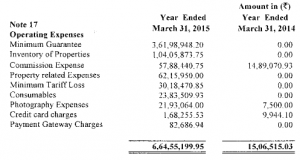
Check out the company’s financials disclosed with the RoC for FY 14-15.
Check out ‘Minimum Guarantee’ and ‘Minimum Tariff Loss’. According to the balance sheet, OYO Rooms is not only providing a minimum guarantee to hotel partners but also is making a big loss due to unoccupied rooms. No wonder they always have some discount deals running as those deals are used as fillers simply to increase bookings irrespective of revenues.
Deep dive into OYO Revenue Model
OYO Rooms declared in February ’16 that it has hit 1 millionth night bookings. It has been in operation for about 2 and a half years now and claims to have 4,500 hotels in their partner network with 45,000 sell-able rooms. Now, that’s 10 rooms per hotel which I think is highly unlikely given the obvious reasons and not forgetting the founder’s history of lying and faking numbers for the sake of publicity and fundraising.
But, let’s take their own revealed numbers and try to analyze the business economics. Let’s consider their per room purchase cost is 1,000 and they are selling it at 1,200, giving them a handsome about 20% margin per room per night here; which again is way too higher than the industry average but let’s assume that everybody just loves OYO and customers want to pay that much premium for that awesome stay! Now, although they got 1 million room nights booked in over 2 years, let’s be generous and assume that they got it all in the current year itself. This will make their current year GMV at 120 crore so far and actual revenues at 24 crore with 20% margin. Now, that’s 2 crore in actual revenues per month.
OYO Rooms Revenue Model
OYO Revenues
Room nights/year – 1,000,000
GMV @ 1,200 Rs. per room per night – 120 cr Rs. per year (10 cr per month)
As per a recent claim by the founder, OYO Rooms boasts of having about 1,200 employees. At an average of 25,000 Rs. per month per employee, that will make it about 3 crore per month, which is itself more than they are making from the business! Not to forget that the average salary per head would be higher than our assumption here since most of their employees are based in Gurgaon.
OYO is also spending huge amount of VC raised money on advertising (online, TV, Radio and other mass media channels) and on other marketing campaigns as well. People close to the advertising industry are telling me that their TV ads could cost anywhere between 30 lacs to 3 crore per ad creative to make and the kind of slots they were running on prime time, the total ad run budget could have been anywhere between 20 to 100 crore. Not to mention the radio, print media and online advertising budget. OYO is spending big bucks on online advertising especially on Google as well, estimated around 1-2 crore per month. But, due to non availability of reliable public sources here, let us not count marketing budget for the sake of convenience.
And, that’s not where the majority of the money is going. The main expense is the inventory. Remember given the business model of OYO Rooms, have to ‘buy out’ the rooms in order to block them for their customers only. OYO is claiming to have 4,500 hotels and 45,000 rooms which seems to be an exaggeration again. But, let’s be generous and assume they at least have half of that, 22,500, rooms under their belly. As mentioned above, assuming their buy out cost per room is 1,000 Rs., total inventory cost per month would be 67.5 crores and thus bringing the total expenses, excluding marketing and other operating costs, to 70.5 crore per month.
OYO Rooms Expenses
Employees – 1,200
Salaries @ 25,000 per employee per month – 3 crore per month
Hotels – 4,500
Rooms (considering an average of 5 per hotel, half of OYO’s claim) – 22,500
Inventory Cost – 67.5 crore per month
Total Expense – 70.5 crore per month (excluding advertising, marketing and other OPEX)
It is a no brainer that with the given statistics, the business is operating at a loss of 60.5 crores per month. This still does not include the big bucks spent on advertising, marketing and other operating costs otherwise the number will shoot up like a rocket.
So, what’s the runway?
After the Softbank lead latest funding round in August, they should be having roughly more than 700 crore in bank, assuming they didn’t burn all the money from the previous round already by then.
Let’s be generous and assume that their revenues are coming from April but their expenses started only after the Softbank round in August. Now, this is a stupid calculation in itself but let’s not be evil. So from August till February gives them 6 months and if they are operating at a burn rate of 60.5 cr per month, they would have already burnt more than 363 crore by now from the operations itself in last 6 months. Let’s assume they were burning half of this in previous 5-6 months in current FY and you will have around 181.5 crore to add up to losses (around 544.5 OPEX expected in current year at current rate). If you want to add up even a minimum of 50-55 crore of advertising and marketing spent here, we can conveniently assume that they have spent at least 600 crores by now. This gives them about 2 months of runway before the remaining cash is all spent at their current burn rate.
Important – Please don’t forget that our calculation here is very generous. According to what I’ve found with many hotel partners of OYO Rooms, they are under selling rooms and hence making loss on per unit basis just to acquire customers. So, with this they don’t have a handsome 20% margin here. But, we understand that startups initially think of discounting as the only strategy to lure and acquire customers, so assuming that eventually even if they turn around and start doing business with industry leading 20% margin, their business still won’t make sense unless their room night bookings skyrocket which doesn’t seem likely.
What’s the way ahead for OYO?
The much hyped startup OYO desperately needs to raise another round in coming 2 to 3 months, mostly by May or latest by July 2016 in order to stay in the game. (Update – And they did and had to raise another round from Softbank in August 2016 of $90 million! I just told ya.) No other big investor except Softbank is currently bullish on the Indian startup scenario due to many down rounds worldwide and speculated consolidation in the ecosystem. Tiger Global Management is no longer interested in the Indian super heroes story. It is unlikely that Softbank will write another greenback cheque if no other big investor is participating and leading the round. Softbank can only see value here if another investor is leading the next round at a higher valuation than the previous one which Softbank lead. A down round won’t be good for Softbank and its investors or LPs. (Update – So, I got wrong on this. Softbank wrote two paychecks of $90 million and $250 million in August 2016 and September 2017 respectively. While my tarrot reading got wrong, the analysis is bang on! Source)
It is quite clear that the revenues are not enough to keep the business self sustained, thanks to the OYO business model. Even if OYO grows at a rapid 5x rate now, due to some miracle, in coming few months, the revenues still will look tiny compared to the heavy inventory, operating and other expenses they have to keep running such a business. This is assuming that even if they have 1 million room nights booked every two months (instead of their current lifetime number of over 2.5 years so far), their actual revenues will be 10 crores on a GMV of 50 crore at a handsome 20% margin which will still be dwarfed by even their existing monthly expenses.
But growth doesn’t seem to be happening with OYO anytime sooner as their website traffic is continuously declining ever since the Softbank round in August despite their on-going advertising and marketing everywhere. According to Alexa, OYO Rooms’s global traffic rank is down to 9552 as of today from around 5,700 in September and is declining ever since.
The android app downloads are also not that impressive especially after the Softbank round. In May 2015, there were about 50,000 to 60,000 app downloads on Google Play Store which shot up to more than 1 million downloads in September, thanks to the TV ad campaigns and increased online advertising, thanks to the latest funding round of $100 million. But, surprisingly the downloads seem to have got stagnated since September.
Also, given the founder’s prima facie focus on publicity stunts and the startup’s expansion into Malaysia, OYO seems to be quickly heading straight into a one way with a dead end. Now, what are you planning to do by running a pilot test in Malaysia? Going global, going places, hitting the hot spot, dreaming to become India’a very own multi national celeb startup? Well, give me a break. You are supposed to be running a business and not a mediocre reality show on who spends the $100 million fast and furiously. Rahul Yadav of Housing fame would have spent it quickly than my friend Ritesh Agarwal in this case as Rahul was also reportedly planning on going global. What these champs don’t understand is that you have got to validate your business in India first because when the investors will wake up from their sweet sleep, you will only end up having all those public spat drama.
On the other hand, Softbank could take a back seat and infuse another small round like they did for Housing.com but that would mark the end of the super saga of the much hyped OYO Rooms.
Am I missing something? Is my data incorrect? Is my projection not having any merits? Please share your thoughts via comments.
Disclaimer: The views are of the author and not of NCrypted. All the images used are of their respective copyright owners.
Startup or starting an online business venture requires long-term technical, functional, financial and emotional commitment. We work with startup founders and entrepreneurs everyday, listen to the problems that they want to solve, see them passionately wanting to start their dream project. While doing this, we have created a plethora of do’s and don’ts, kind of a knowledge-base, for startups. We are now able to understand why some of them succeed and why most fail. They often lack something or the other that they could not address, resolve or manage which leads to a closure, in many cases even before they could hit traction.
Here are the nine most important factors that I’ve personally experienced and believe that a founder or entrepreneur needs to keep in mind and work upon before getting started with their startup journey.
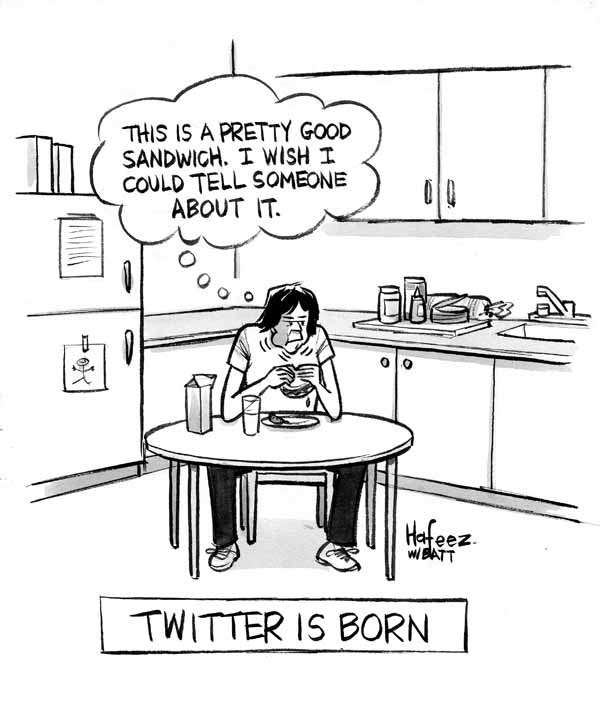
1. Ideas are easy. Implementation is everything.
Twitter-is-born
I remember when I went to Bangalore, to study IT engineering, my dad once told me it would be a lot convenient if they could see me daily from home. The idea was some 7-8 years early to be implemented into a viable product for the Indian market. Chatting was already a phenomenon by then and was becoming the next big thing back in India as well. But here we were talking about mobile telephony with live video streaming as a concept although none of us knew that’s what it is called back then!
Back in those days, 2000-1, cellular revolution was yet to heat up in India. Internet broadband speed was slow and 3G were not yet in commercial use in India or nowhere in the world for that matter. The idea was simple to come up with something like Skype although Skype itself was not founded back then. While the idea was terrific and it addressed a real problem, solving it was not practical in those times. The market was immature and implementing something like that would be too ahead of the time even if I had a try.
I later on started a community website called itprofiles.net in 2002 when I was 20 years old. It now redirects to NCrypted’s products & platform store front (NCrypted.net), but back then it was first started as a resource forum for my friends and colleagues and later on pivoted to a community model wherein students from not just my college but other colleges as well could register, connect and get in touch with each other to discuss assignments. It had features like sending friend requests, managing friends network and had a forum wherein anybody could share files, start posts/threads, like and comment. In a few months, we had more than 5,000 members from all over Bangalore, mostly comprising college students and some faculties as well.
I didn’t even know back then that I had created a social network startup which was almost two years before Facebook’s inception. The startup ecosystem was absent in India back then and there was almost no encouragement from the industry or college for something like this in those times.
I had no idea back then how this thing can make money or how it can survive on long run, what is the future for this industry as online social networking was a new concept back then with only a handful of sites such as Myspace, Friendster (both launched after 2003) in the US, back in India though it was entirely unexplored. Social networking bug did not even hit the US market at that time. There were a few startups but they were more of a dating short of platform rather than a social networking engagement. I didn’t even know back then that I could approach some investors to raise money for expansion.
Sounds familiar? Aren’t today’s founders and entrepreneurs starting the same way and face the same sort of questions? Well, except now they know from where to raise money as there is an established startup ecosystem worldwide and in India as well.
My point is simple. In 2000-1 my dad advised me on an idea which couldn’t be implemented. In 2002 I had an idea and went on to implement as my personal project, got some traction as well but couldn’t make it big. I could blame that to the absence of an ecosystem or investor backup or general awareness or guidance and so on and so forth. But, the point is simple – that’s what you call implementation. Either you are able to do it or you are not. Having the right product-market fit, having good user reception, traction, investor interest, market maturity, current market size, future market growth projection, everything counts when you want to implement that ‘idea’ and shape it into a product. If you don’t have something or the other of this or can’t get it, your implementation won’t work.
Ask these 6 questions to yourself in order to be better at implementation:
What problem are you trying to solve? (Psst! Tips on finding the right startup business model)
Is your product going to disrupt any industry? If not, what is your USP? (Remember disruption is not the only way for a startup. You can clone and copy a business idea, be better at implementing it and nothing is wrong with that.)
What is the current market size?
What is the projected market growth a couple of years down the line?
Have you run any tests for product-market fit analysis?
Do you have the resources and capacity to solve the problem? If not, what is missing?
2. Problem close to heart
Startup Idea
“The best startups generally come from entrepreneurs needing to scratch an itch.” – Michael Arrington, Founder – TechCrunch
You can’t just copy somebody’s execution. You can copy an idea, you can copy a process, you can copy a product, but to copy an execution (implementation in other words as discussed above) is a difficult job, next to impossible, otherwise we would be seeing many Googles, Facebooks, WalMarts today. And the reason these businesses are very well run and executed, the very secret of it lies in the way they got started.
The founders of these businesses identified a problem which was close to them and their personal lives. They had to solve it and they saw an opportunity. When you have lived the problem, understood it with a personal experience, have survived it and realized that it needs to be taken care of, you will come up with a solution that would be hard for others to imitate. The reason it would be hard for others is because of your perseverance, because it is close to your heart, because you will have lived and survived it.
3. Perfection is myth. Getting started is the key.
“If you are not embarrassed by the first version of your product, you’ve launched too late.” – Reid Hoffman
A few years back we did a quick survey and found out that out of the hundreds of projects that we’ve worked upon with our clients, hardly a handful of them were having some respectable traffic figures. It was not a very good sign for us. We decided to dig more into this.
Back then we were merely a development company and would work as per the client’s requirement and as per their direction. We didn’t suggest nor provided any guidance on anything except the technology part. We found out that many of our clients were spending months in first brainstorming their startup or venture idea. Then they want their product or project to be perfect from the get go, so they kept on requesting for alterations mid way of the development, they would request a feature to be added and a certain feature to be removed etc. And we didn’t mind doing any of this. But that was the root cause of the problem.
Our clients were completely relying on us for their product to be ‘perfect’. Most of the clients had an understanding that they will provide us with instructions on their project and idea, we will develop it and they will do some sort of SEO and marketing later on and boom, they will start making money! Except, of course, it almost never worked like that. What our clients didn’t realize back then was that most of their marketing is addressed during their product creation.
It is after that survey that we completely changed our approach and process. We realized that if we want to partner with startups and budding entrepreneurs and founders, we have to take the call. We understood that our experience can be leveraged here. I personally started believing that my initial startup failures and our vast experience of working with clients the old way can become handy in guiding our clients on their new ventures. We agreed that simply becoming a technology partner isn’t enough, we have to become the product catalysts, we had to become the startup evangelists!
4. Build prototype, validate the product, listen to users
Build Prototype/MVP
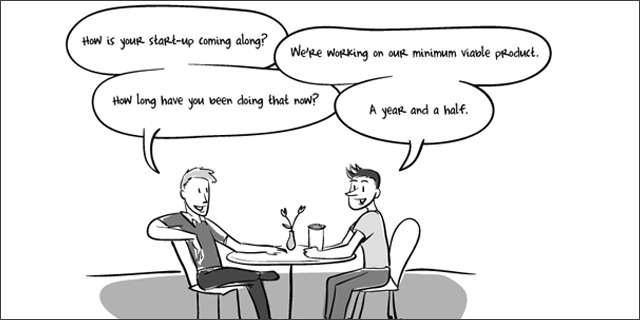
We advise to our clients and partners now not to focus too much on perfection. Perfectionism leads to procrastination. For example, don’t try to compete with Facebook by building all the same features that of Facebook first as you might never make it there now. Rather build your prototype or MVP (minimum viable product) that has a distinguished identity and USP. Try to address a problem that Facebook is avoiding or not doing. Find out why they are not doing it and just focus on that part. You might fail while trying to do so, but do that quickly even if you have to fail. Getting into the market with an MVP has many benefits. The biggest one is that it will allow you to start listening to your real users. You will get real feedback. And you can use that feedback to add on features accordingly.
Imagine if you added features all on your own without listening to your users!
5. Don’t love your design so much. Customers don’t want your design. They want a solution.
talk-to-customers
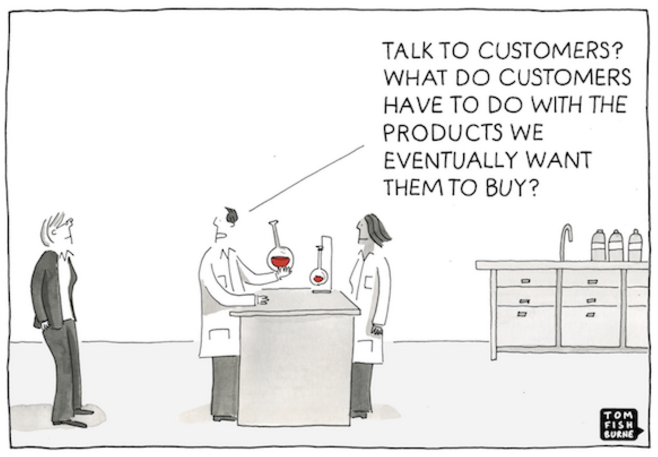
Another mistake that founders do is to fall in love with their design. If you are building a static personal site, it is understandable for you to have that best in class design. However, if you are building a product that will have user generated content (UGC) and still if you focus too much on that creative design work, you might be spending your important time on something that’s not that important.
Design is not that important for web and mobile products unless you are into hardware. Customers won’t buy from your website just because they love your site’s design. A customer might buy an iPhone just because of it’s slick design, but he won’t shop for that iPhone on Amazon just because of Amazon’s slick design! There is a big difference how a consumer shops online versus how s/he shops offline.
Now, don’t misunderstand UX with design/UI. UX (User Experience), on the other hand, is very important. Your product needs to be user friendly, not necessarily an award winner in design. Your product needs to easily allow that user to sign up, add that product into the shopping cart, check out and make the payment. If you can allow him/her to do this in one single step, you are brilliant. But if you cannot, you are still okay as long as your competitors don’t beat you on this. But, don’t worry so much about that not so good looking design. Ever wondered how Amazon used to look in 2001? How Yahoo! was in 1999? How Facebook looked in 2005? Some of the most trafficked websites in the world today are not known for their sexy design as much as they are for their core value proposition and key offering – overall user experience. Check out Craigslist or Reddit if you don’t agree on this.
Having said so, I’m not trying to say that design is not important at all. Of course, it is – but, it’s not a priority and it’s not everything. If you are good at it and have better imagination prowess or possess a team that can come up with a very creative stuff without wasting much time and money, go ahead and get that design. But, if you don’t and can’t, it’s not worth your time and money to focus on design right upfront as you have better issues at hand before design that will need your attention. You can always improve upon your design in your upcoming versions, but improving upon your key offering will be difficult if it wasn’t able to catch enough eyeballs in the first hit.
6. Don’t fret about your features or product launch, think of the problem first that you want to solve.
product-features
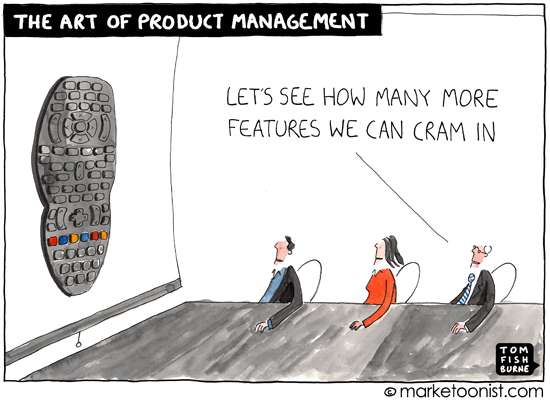
Entrepreneurs many times misunderstand a successful product with a product that has many features. This is completely wrong. Twitter, when it started, was doing just one thing – allowing you to send a 140 characters messaged branded as a ‘Tweet’. It didn’t have any other feature at all. Later on they learnt from their users and added several features that they understood their target and existing users would love using. This is the key differentiation between how successful startups adapt to the user requirement and how others don’t and simply go ahead by adding unnecessary features.
Remove those unwanted features if you can today. You are better off with those 3 great modules that addresses a clear problem rather than having 30 features that tries to do everything.
Now, most development companies you might partner with wouldn’t advise you this. Because the more the number of features, the more money they will make out of you. Thankfully, we are different! 😉
7. Don’t fall in love with your product. Love your customers and let them love your product.
talk-to-customers
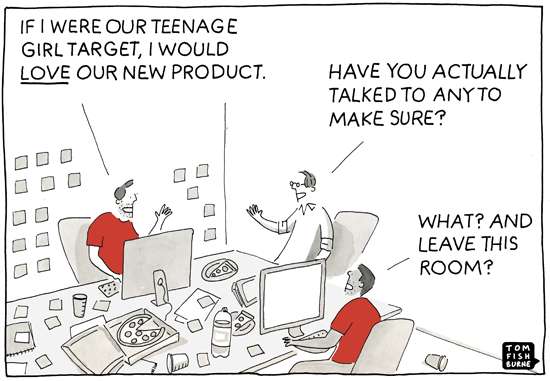
Create a product that your target users would love to use, not just you. Many products are created out of the founder’s passion for a particular thing. Which is alright but if that doesn’t address a real problem very efficiently, the founder might end up being the only person loving that product. Falling in love with your own product is a vicious circle. If you end up doing that, you will require a long time to come out of it because as time passes, you will treat your product as your baby and things will just start getting worse.
Your product could be your brainchild but can never be your baby. Don’t call it your baby. It is not a living thing. It won’t pay by itself. Your users will, your customers will. You will alienate your product one day if it’s not fulfilling your dreams. So, don’t fall for this. Your customer is the most important stakeholder of your game, love him, respect him and he will give it back.
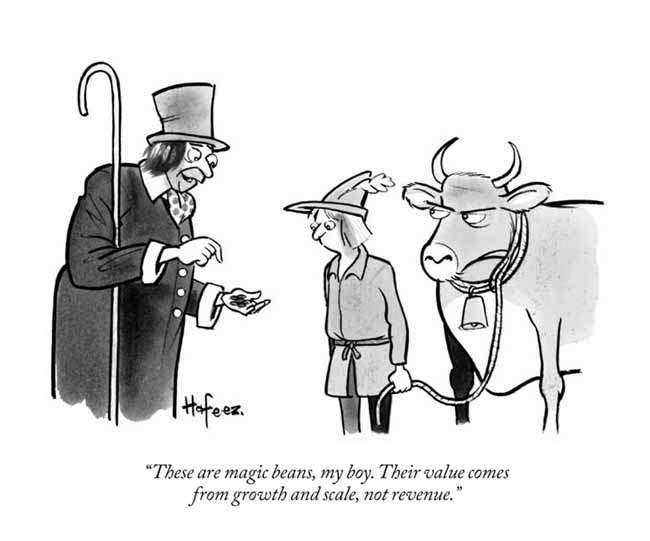
8. Trust your guts but verify with validation.
Magic-Beans
Many a times, since the product is our baby, founders continue to rely on their guts and end up being isolated. It is not enough to simply continue believing in your gut feeling. Gut feeling and what you believe from deep inside is no doubt the utmost important factor before you want to startup, but if you simply and blindly rely upon that, you might not like the end result a few months down the line.
Your target audience must be in agreement with your gut feeling and that is when you can say that you have validated your product. Finding the right product-market fit is tricky and getting traction is even trickier. You have got to validate your product ASAP.
Try going to market with a soft launch or a beta. Release your beta, that would probably be with your MVP product, to a closed network of people. People you would have known or are in a known circle and can give you neutral opinion of your product/service and feedback that you can take as a base and work upon. Naturally you don’t have resources when you are starting up and with limited resources your launch also has to be limited. But you want to capture this to build a solid foundation and then work on your next phase to come out with an improved product and service offering.
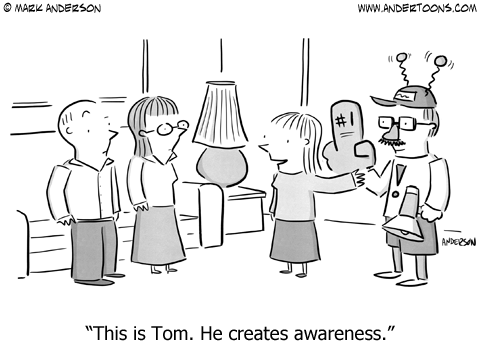
9. Is your site/app converting users or is simply your visiting card?
market-awareness
Gone are the days when every other shop needed an online place just like they had to have a visiting card. Your site needs to be engaging and your content needs to be appealing to your target audience. You want to make sure that your visitor finds the material and content displayed on your site interesting and gives you more page views. And in doing so, you are increasing the probability of him/her of getting converted by subscribing to your newsletter, sending you a contact request, signing up or simply buying.
So, what do you think about these tips? Share your thoughts in the comments section. In case you are planning to startup, contact our business team at NCrypted for serious business consultation.
In case you wish to deep dive into understanding business models of some of the world’s most famous startups, you would like going through some articles our content research teams have penned down recently.
As we have been discussing so far about your startup business and ideas, there is no better time to get started than this Christmas season. There is a reason why Christmas accounts for more than 25% of annual sales for some of the most trafficked online marketplaces.
It takes great efforts in identifying the target audience, experimenting with your innovative idea, launching the website and mobile apps, and standing out amongst the competition.We understand the dilemma as we have been there, done that.
We have learnt that the secret lies in just getting started. Most entrepreneurs spend months thinking about getting started and when they finally want to, they realize it’s too late.
Check out our readymade web platforms that lets you kick start your venture without moving a muscle.
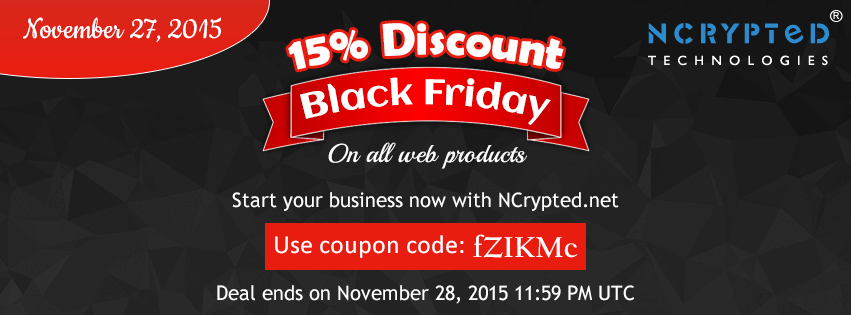
And how would you like it if we provide you with an exclusive 15% discount on base product and platform prices? Of course, this is not a big offer but we understand that as a startup and as a business, you have to worry about a lot other things than simply launching your site.
Dream Big. Start Small. Do it fast.
So what are you thinking? Pick this coupon code fZIKMc to avail 15% flat discount on wide range of products
Not only that, we will have exclusive discounts for you on customizations and our business team will work with you to listen to your requirements and help provide you with a relevant solution.
The Christmas week offer is now extended till 31st December, 2015 11:59 PM UTC only.
Kindly get in touch to know more on how we can help get you started this season!
NCrypted wishes everyone Merry Christmas and Happy New Year 2016!
How NCrypted delivers business value?
Our primary focus would be on understanding your requirements and providing you with technology solutions while keeping your target audience and market in mind. We understand that a serious project is an on-going engagement that requires technical, functional, financial and emotional commitment. We want to believe in your idea as much as you do. Get in touch to find out how NCrypted can help bring your idea to life so that you can go to market with confidence.
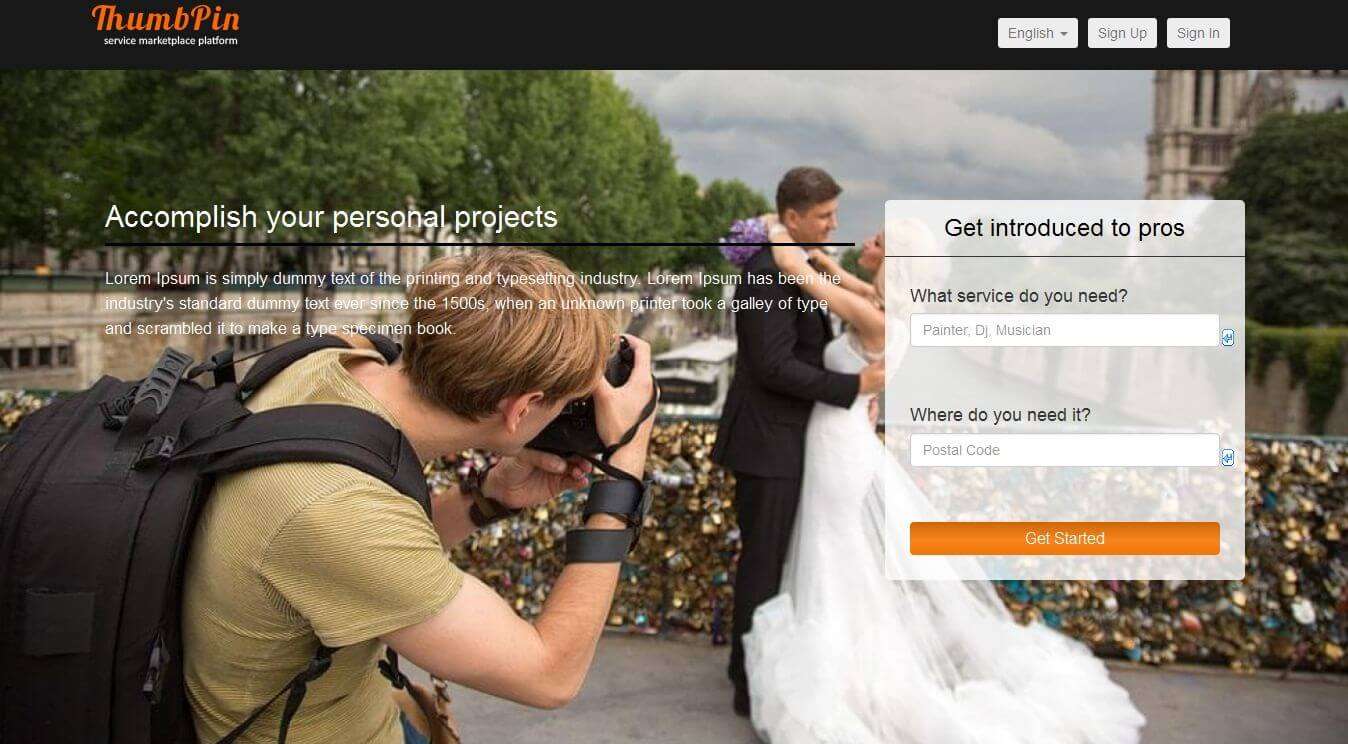
The service economy has hailed towards the era of uberification, where marketplaces can serve the consumers with the offline services through their websites and mobile apps (On-Demand Mobile Services). And, when this trend is hailing, it’s the next smart move to start your own local and small service providing website similar to Thumbtack. However, if you are the next startup business or the upcoming entrepreneur, implementing the ‘uber for x’ business model can help you into making the profitable business. The coming year 2016 is also being predicted to be the year of small service business trends. And, to help you in this, NCrypted has come up with one such ‘uber for x’ model – ‘Thumbpin’.
Thumbpin – a small service marketplace platform that lets you start your own local service providing website similar to Thumbtack. It is an online marketplace website that connects service providers with customers. The customers need not roam around tirelessly in search of people for getting a task done. Rather, they can get on online marketplace and hire the best professionals they find it for their work and click the button and get the paid services accordingly.
The services the customers usually demand could be for logistics service, groceries, massage and wellness treatments, hair and makeup artist, guitar tutors, doctor, baby sitters, events and wedding planner, photographer and the list goes endless. To fulfill these services there are numerous service providers available on Thumbpin.
Thumbpin works upon the commission-based business model, where the service providers need to purchase the credits in order to be able to send the quotes to the customers for a specific job. Consequently, this model is highly intuitive for those thinking to generate revenue merely by providing a platform to the service providers who are thinking to earn from the society with their professional services and serve them.
Highlighting Features of Thumbpin:
Attractive Admin Dashboard with its ease of use
User-Friendly and Mobile Friendly (Responsive) GUI
Service categories and sub-categories management (CMS)
If you are willing to start one such local service providing website, launch it with Thumbpin. Or, if you want to target any niche market segment or according to your business needs, share your ideas with us and we shall customize it with Thumbpin. Please get in touch to know more on this subject.
Learn how we can transform startups to successful businesses…
How NCrypted delivers business value?
Our primary focus would be on understanding your requirements and providing you with technology solutions while keeping your target audience and market in mind. We understand that a serious project is an on-going engagement that requires technical, functional, financial and emotional commitment. We want to believe in your idea as much as you do. Get in touch to find out how NCrypted can help bring your idea to life so that you can go to market with confidence.
“Should we hire a freelancer for the development of our product?”
This is a good question entrepreneurs, startups and businesses ask often. The answer in most cases would simply be a big ‘NO’. Let us discuss why.
Your project is a team work and not an individual task
Outsourcing your entire project to a freelancer is not advisable for several reasons. Such scale of projects generally require an entire team to work on comprising of business analysts, designers (there are 3 types of designers only – web/HTML/graphics), developers, DBA (database architect), project manager, QA/Testing engineers among others. When you hire a freelancer, you will generally hire a developer only and at max, a designer – and that is not enough to build you a market-ready product.
This is like hiring simply a mason to build you an entire apartment! While mason is a very important team member, but he cannot be the entire team all by himself! And most of the time you will overlook the importance of hiring a good mason which is critical. You will also likely bypass the need of hiring an architect (business analysts) who can plan your entire project first before even the design work can start.
A software application development project (website or mobile app) is a serious job and involves a team, not just an individual even if that individual is highly talented, unless you simply have a very basic static website work. So you should not risk your money and time if you don’t understand software development life cycle (SDLC) very well.
Finding your ‘A Team’ on freelancing sites could be a nightmare!
Apparently, as you might already have experienced, finding a freelancer on popular freelancing sites such as Elance/Upwork, Freelancer.com is a cumbersome process. You get more than a dozen bids (more than a few dozens in some cases) within a few hours after you post your project and invite bids.
In late 2012, Reddit CEO Yishan Wong posted on Quora that hiring freelancers from the likes of oDesk or Elance is a bad idea, because “end products” never turn out more than “merely okay” or usually “failure” – directly insulting the dozens of remote workers that the company employed at the time. Here is Wong’s reply to the question “How does a business person hire a good developer/programmer/engineer on Elance or oDesk?”
“You shouldn’t do this; it will probably result in failure. I have a friend who is a designer (so, closer to technology and implementation than a business person; about as close as you can be without being outright technical yourself), and he was hiring developers via Elance. Even with consultation from friends of his (e.g. me) who were real engineers, it was extremely difficult to find decent engineers who could do the things he needed, deliver reliably, and iterate according to ongoing testing/customer feedback. The end product was merely “okay” – kind of slow, with little glitches here and there. If you have total technical ignorance and no local (friend) resources to help you, hiring from eLance or oDesk is almost impossible to do correctly. I would recommend trying another route.” — Reddit CEO Yishan Wong
Those bids don’t address your specific requirements
Most of the proposals are pure copy and paste jobs. It’s quite possible that the freelancer has not read your requirement and hence cannot/does not address it specifically. With this, you are left with no other option but to hook up with the first few bidders you caught online. So this becomes a game of luck rather than merit.
“Despite the fact that freelancers need to go through hell and high water to gain the highest verification level on UpWork, the persistent unskilled newbies from the Third World countries came flooding in on this site. Hopefully it will sort out the problem with the unskilled workforce overpopulation and UpWork will remain a harbor of safe labor and respect for skill, not cheapness. … The demographics of UpWork’s population are rather tilted towards the different sides of the planet – the most classic scheme one would find on UpWork is some USA or UK employer hiring a European or Eastern European freelancer.” – Idan Cohen reviewing Upwork
$2 per hour – seriously?
Since these sites have freelancers joining all around the world, a US, German, British, or French freelancer is directly in competition with an Indonesian or Bangladeshi rookie who can survive for less than $2/hour. Standard of living and hence cost of living is higher in countries such as the US and Western Europe etc. and hence it would be difficult for those guys to compete with somebody in Indonesia, for example. Not to mention quality, but you are kind of ‘forced’ to take your decision based on the cheapest quote that you got. One of the cheapest, if not ‘the cheapest’, but how does it matter anyway?
So, when is working with a freelancer advisable then?
You should prefer working with a freelancer under one of the following situations/conditions:
If you are a good project manager (both technically and functionally)
Have really low budget (and you don’t care much about quality for that matter!)
Want to test the shores with a pre-beta version first with some private test users (remember for ‘beta’ product or real test users also, this won’t work)
Have a very basic static website work
Want to outsource only a part of your project and you know what you are doing!
Otherwise, just stay away if you have a serious project on hand. Read our blog on Freelancers Vs Agency Developers for more insights on this topic.
How NCrypted delivers business value?
Our primary focus would be on understanding your requirements and providing you with technology solutions while keeping your target audience and market in mind. We understand that a serious project is an on-going engagement that requires technical, functional, financial and emotional commitment. We want to believe in your idea as much as you do. Get in touch to find out how NCrypted can help bring your idea to life so that you can go to market with confidence.
The holiday season is approaching and we all are enthusiast to start with mega shopping this year end.
NCrypted Technologies greets every customers Happy Thanksgiving Day towards the faith shown by them on our web services and web products.
The Day Following is the ‘Black Friday’ marking the biggest shopping day of the year. It is the time when everyone offers best deals and discounts. It is also a great season to start your own online venture and kickstart your startup business with NCrypted’s ready-made web products. These products are the scripts and platforms that lets you easily start your own website or mobile app without moving a muscle. Moreover, it is highly scalable and robust that can easily fit into your business model.
To help you in your quest, NCrypted announces 15% discount on all web products on this Black Friday. You can get the customized clone scripts of the popular websites like AirBNB, Kickstarter, Upwork (Elance, Odesk, Freelancer), Flippa, Reddit, Amazon, Poshmark, Etsy and many more. Black Friday is a great occasion to launch your website and mobile applications.
As Christmas is forthcoming festival and holiday season is upcoming, it can be a great occasion to launch your website and mobile applications in any niche market.
So what are you thinking, pick this coupon code fZIKMc to avail 15% flat discount on the below listed products:
Please also enquire in case you have other requirements on any other web or mobile app development service or require a particular website to be cloned or custom made for you, we might also have a special Black Friday offer for you as well.
Hurry Up! The Offer expires on 28th Nov 2015, 11:59 PM UTC.
How to use the Black Friday coupon code?
You can enter the code while checking out at the payment info page. Use this coupon code fZIKMc to avail 15% flat discount on all products. You can also use this offer in case you have customization requirements – just get in touch to find out more before the offer expires!
Happy Black Friday! Happy Shopping!
Learn how we can transform startups to successful businesses…
How NCrypted delivers business value?
Our primary focus would be on understanding your requirements and providing you with technology solutions while keeping your target audience and market in mind. We understand that a serious project is an on-going engagement that requires technical, functional, financial and emotional commitment. We want to believe in your idea as much as you do. Get in touch to find out how NCrypted can help bring your idea to life so that you can go to market with confidence.
Internet entrepreneurs know by now that the future of the web is mobile. But, that does not mean web is dead, and mobile simply does not mean only mobile applications as well. Is it better to get started first with a mobile optimized website or a mobile app rather? The debate, in most cases, is rhetorical.
But, what is right? What comes first? A mobile app or a mobile website?
The answer lies in your requirement and the type of audience and market you want to target your business to rather than going with vox populi.
Before we dig more into this, you may first want to check out this blog post on what is a mobile friendly website to understand what we mean when we say a mobile site and a mobile app.
Speed and Accessibility
A mobile app is faster, more interactive and can interact with all kinds of other phone features like accessing phone contacts, location services, camera etc which a website cannot. But the app must be installed to be of any use at all, while a good mobile site can simply be navigated from a mobile browser.
While the mobile app is comparatively faster, it has accessibility issues as it has to be installed first. Not only that, you will have to develop mobile applications for all popular mobile operating platforms such as iOS, Android, Windows, Blackberry and Symbian as just one app will get you limited accessibility.
On the other hand, a native mobile app can be accessed offline (without internet) as well while a mobile site always requires internet access.
What is more cost effective – mobile app or mobile site?
It’s typically cheaper to build or upgrade to a mobile site or a responsive website compared to building a mobile application. Not just that, mobile apps have platform dependency, so if you are talking about a mobile app, you will first need to decide whether you want an iOS app (for iPhone and iPad), an Android app, a Windows Mobile app, a Blackberry app or a Symbian app? If your budget is right, you will want to go with all of them just to make sure you don’t leave out users on other platforms.
But, in case you are having a budget constraint, launch your mobile site first.
Which one is more user friendly?
Mobile websites have static, navigational user interface while mobile apps can have interactive user interface. While responsive web design (RWD) approach on the other hand addresses and resolves much of the usability issues for a mobile-friendly website, mobile app definitely has an edge here as it is a native application and has better leverage.
This is the reason why there are better interactive games being developed as mobile apps rather than a web app. So if your startup is an interactive game, you would definitely want to launch it as a mobile app first.
Marketing point of view
Mobile site is a clear winner from marketing point of view as well and especially when you have systematic investment plan for your startup business. Let us look at some of the very fundamental marketing channels available today for your startup and see whether they make sense for your mobile app or mobile website:
Search Engine Optimization (A ‘go’ for a mobile site but not possible or doesn’t make sense for a mobile app, so the biggest ‘free’ platform of search engine traffic is available to you if you have a mobile website)
Search Engine Marketing – Paid (Again, doesn’t make sense to start marketing on Google Adwords about your mobile app, does it?)
Affiliate & Referral Marketing (Websites can leverage this channel better than mobile apps)
App Store (Consumers search on app stores on mobile devices so having a mobile app can be an advantage for this purpose, but again the odds are there in getting your app ranked for the ‘desired’ keywords)
Traditional Mass Media such as television, radio, newspaper etc. (Works for both the website and mobile app only if you have big pockets!)
So it turns out that a mobile-friendly website is a clear winner from marketing point of view as well unless you have sound marketing and advertising budget.
You get the ball rolling first with launching your website and then you can rely upon viral marketing once you’ve got word of mouth to launch your mobile app.
Understanding your project, your audience and target market segment first!
It is vital to understand your audience and target market first before anything else. For a mobile only startup such as WhatApp, Line, WeChat, it made sense to come up with just the mobile app for different mobile platforms. The reason was clear as these apps interact with other mobile features such as your phone contacts, dialer and in some cases, location services which is not possible for a website to do. A website, mobile-friendly or not, cannot interact with such phone’s in-built features.
On the other hand, for a corporate website of a company such as of IBM’s or Intel’s, it makes more sense to come up with a mobile-friendly website only and not a mobile app. Why would someone download your company’s app if they don’t have anything to do with it on a daily basis? A mobile app’s basic purpose is user interaction while leveraging phone features. So, a good idea would be to stay away from developing your mobile app if you don’t need to leverage any of the phone features with your mobile app in plan. Now, I mean to say, you don’t ‘need’ to and not ‘want’ to because you will, in most case, ‘want’ to do it anyway even if that doesn’t make sense! But then it would be a waste of your time and money.
The Conclusion – Website first or mobile app?
Well, unless you are a mobile-only startup, website first is the way to go! There are successful startups and businesses that have done this – they first launched their website (mobile-friendly, of course) and then came up with mobile apps on different platforms. There are many examples such as Google, Amazon, Flipkart, Alibaba, Airbnb etc. E-commerce websites and startups want to follow this strategy. Online marketplaces want to adapt this strategy as well. And if you are one of them, so do you.
Update: As per the recent news, Myntra, the first e-commerce site to go app-only, pilots to a mobile site now as their strategy to go app-only backfired!
What is a mobile friendly or a mobile-ready website?
A mobile friendly or rather mobile optimized website is one that displays correctly on smartphones, tablets or mobile devices. Mobile friendly site could either be a mobile-optimized version of your website or a responsive website.
What is responsive web design (RWD)?
Responsive web design is an approach to web designing aimed at crafting sites to provide an optimal viewing and interaction experience to viewers. It resonates to easy reading and navigation with a minimum of re-sizing, panning and scrolling across a wide range of devices such as desktop monitors to hand-held devices like mobile phones and tablets.
A responsive design kind of ‘responses’ to the browser resolution and automatically adjusts its design layout to provide an optimum viewing experience to the user.
How is a responsive website different than a mobile site?
Having a mobile friendly website doesn’t necessarily mean a responsive site. A mobile site rather a mobile-optimized site is a minimized version of the main website specifically crafted for mobile viewing. Hence, it will have limited features and minimum graphics considering mobile viewing in mind. Your users, in most cases, will get redirected to your mobile site automatically if they’re trying to access your main website from a mobile browser, to help maximize their mobile experience, as your normal website is not optimized for mobile viewing. Typical mobile websites have mobile or simply ‘m’ sub-domain level access. E.g. http://m.yoursite.com. This way, it typically becomes a separate instance stored on a separate directory altogether and hence will be different from your main site.
Responsive website, on the other hand, is mainly managed through CSS (style sheets) and does not require any duplicate instance whatsoever.
Mobile sites are though not very much in demand today due to the exponential versatility of responsive web designs, but in some cases, if the design UX is complex, it would be better to have a mobile site compared to a responsive design as responsive design approach has several design related limitations and sometimes can become difficult for your web design company to craft and produce effectively.
Why is it important to have a mobile friendly website today?
According to ComScore data of 2015, mobile now exceeds desktop internet usage. Consumers won’t return to a website if it doesn’t load properly on their mobile device.
Not surprisingly, on April 21, 2015, Google announced that it would begin using mobile-friendly sites as a ranking signal. And as you might have already seen, Google has already started implementing it by showing ‘Mobile-friendly’ tag on mobile-optimized website on their search result pages.
There are many straight forward reasons why having a mobile friendly site helps your business. A mobile-ready website –
Loads fast
Is easy to read
Is easy to navigate
Has minimal scrolling (not just vertically but also horizontally)